
Let’s Talk
Literacy
Reports

The Final Report on Reading
A 45 minute summary of the first stage of the Reading Theme
Progress Report - Week 1 - General Questions
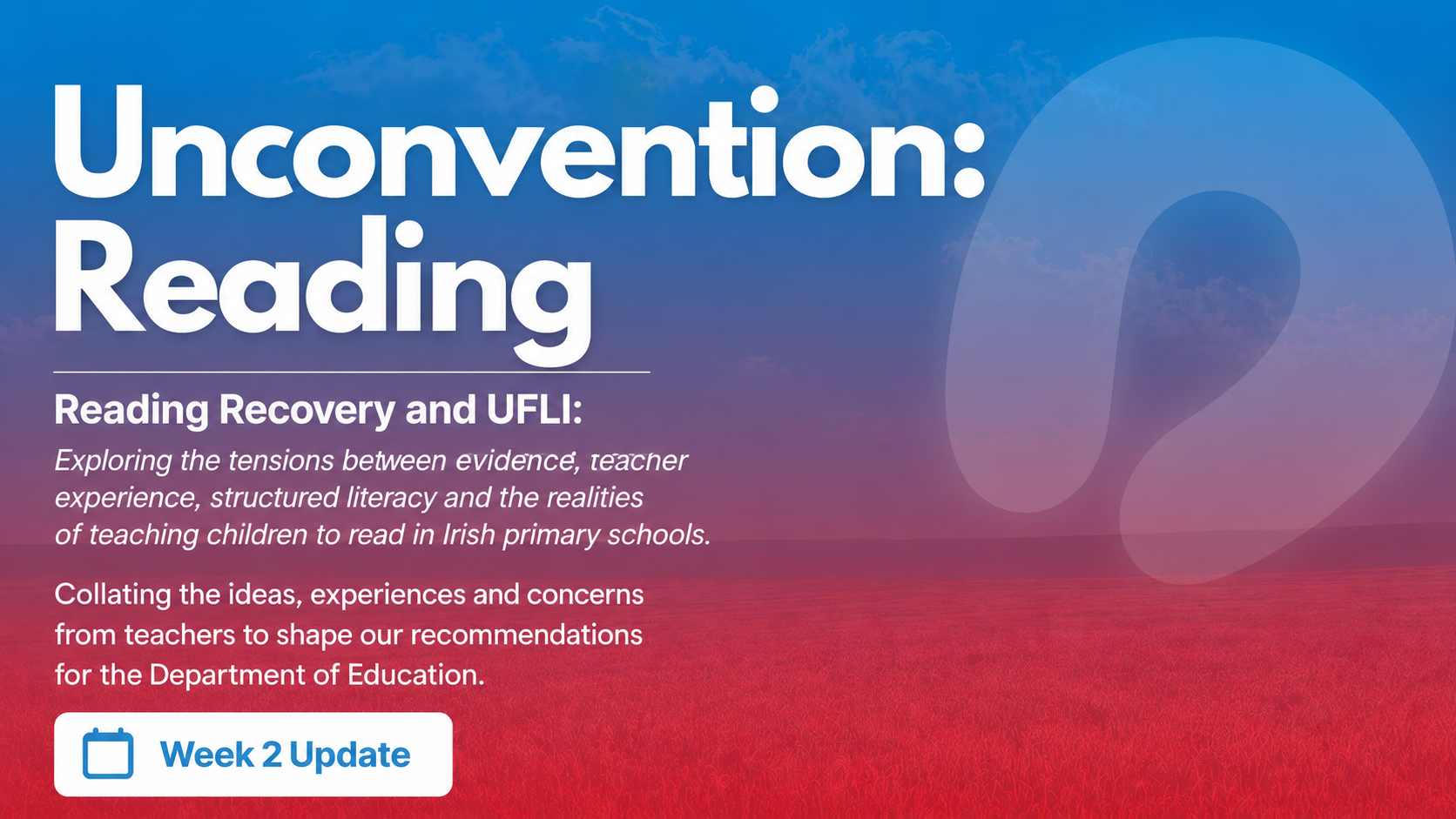
Progress Report - Week 2 - Reading Recovery and UFLI
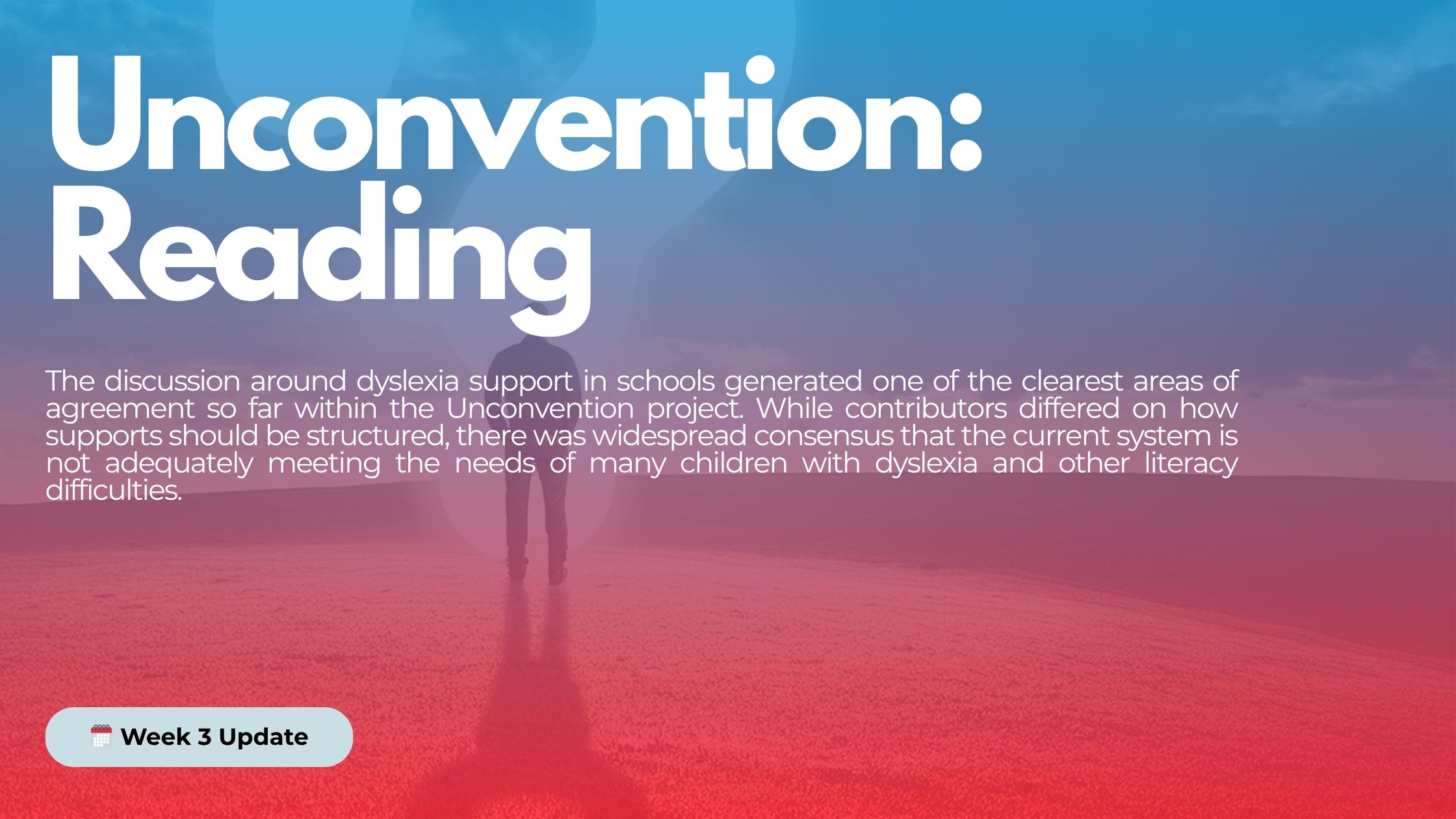
Progress Report - Week 3 - Dyslexia
Podcast: Interview with Dee O'Toole
Recommendations
1️⃣ Establish a National Reading Entitlement
Every child should be guaranteed high-quality classroom instruction, regular assessment, rapid targeted support and specialist intervention when required. Access should not depend on geography, school capacity or a parent’s ability to advocate.
2️⃣ Define Reading Success Broadly
Success should include accurate decoding, fluency, vocabulary, comprehension and the ability to read independently for meaningful purposes. Screening scores and short-term programme gains should not be treated as sufficient evidence of lasting success.
3️⃣ Put Expertise Before Programmes
Ireland should invest in teachers’ knowledge of reading development, structured literacy, dyslexia, assessment and intervention. Programmes can provide useful structure, but they cannot replace skilled teachers who can respond to individual children.
4️⃣ Guarantee a Graduated Pathway of Support
Children should be able to move quickly from classroom support to targeted small-group teaching, intensive individual intervention and specialist provision. Support should begin as soon as a difficulty emerges rather than waiting for failure to become entrenched.
5️⃣ Independently Evaluate Reading Programmes
Publicly supported programmes and interventions should be evaluated independently using long-term outcomes. Evaluations should consider which children benefit, the conditions required for success, the costs involved and how each programme compares with credible alternatives.
6️⃣ Protect Reading Time and Access to Books
Schools need sufficient time for explicit reading instruction as well as opportunities to read for meaning and pleasure. Every child should have access to attractive, varied and age-appropriate books, including material suited to older struggling readers.
7️⃣ Use Mastery to Guide Teaching, Not Belonging
Teaching should respond flexibly to what each child has mastered without separating children from their age peers or narrowing their education around a reading level. Individual pacing and targeted support can operate within an inclusive, broad primary curriculum.
8️⃣ Support Families as Partners
Families should receive accessible guidance, books and practical support to encourage literacy development at home. Parent involvement is valuable, but a child’s success must not depend on the family’s time, confidence, resources or ability to purchase private help.
9️⃣ Expand and Evaluate Specialist Provision
Ireland should address the limited and uneven availability of dyslexia specialists, reading classes and reading schools. Any expansion should include clear access criteria, meaningful progress measures and appropriate pathways between specialist and mainstream provision.
Missing Links
1️⃣ Children’s Voices
We heard relatively little directly from children about what helps them learn to read, what makes reading difficult and what encourages or discourages them. Their experiences should inform how teaching and support are designed.
2️⃣ Families Facing the Greatest Barriers
Parents contributed to the inquiry, but families with limited time, confidence, literacy, finances or access to advocacy remain underrepresented. We need to understand what happens when families cannot secure assessments, specialist support or private help.
3️⃣ Irish Long-Term Evidence
Ireland lacks sufficient independent, long-term evidence comparing reading programmes and interventions. We need to know whether early improvements last, which children benefit and what approaches offer the best outcomes for the resources invested.
4️⃣ Teacher Education and Policy Voices
Initial Teacher Education providers, policymakers and those responsible for national literacy planning were not heard from sufficiently. Their input is needed to understand how teachers are prepared, how programmes are selected and how current decisions are evaluated.
5️⃣ A Clear National Delivery Model
There is broad support for earlier intervention and greater specialist expertise, but less certainty about how these should be organised nationally. Further work is needed to define the roles of classroom teachers, SET teachers, dyslexia specialists, reading classes and external services.
5 Big Questions
1️⃣ What Should Every Child Be Guaranteed?
What minimum standard of reading instruction, assessment and intervention should every child receive? How can Ireland ensure that access does not depend on a child’s location, school or family circumstances?
2️⃣ What Does It Mean to Be a Successful Reader?
Is success simply the ability to decode and comprehend text, or should it also include confidence, independence and choosing to read? What outcomes should Ireland measure, and how far into the future should progress be tracked?
3️⃣ Where Should Ireland Invest First?
Should limited resources be directed towards programmes, wider teacher expertise or specialist intervention? What evidence would justify prioritising one investment over another?
4️⃣ How Should We Respond When a Child Struggles?
What should happen from the moment a reading difficulty is first identified? How quickly should support intensify, and when should specialist expertise or placement become available?
5️⃣ How Can We Teach for Mastery Without Limiting Belonging?
How can instruction move at a pace suited to each child while protecting their connection to peers and the wider curriculum? Where is the balance between individualised progression and an inclusive classroom community?
🙋🏻♂️ What exactly are we going to do differently about reading in the next 5 years?
🙋🏻♂️ Why are many children still leaving primary school unable to read fluently after 8 years in the system?
Because many children’s needs are not being met, there is almost no training in SEND, and it blocks access to learning even when their impairment is not cognitive. This is exactly why so many parents deregister their children and their children get much better results outside of school.
Time allocations in the PCF are the elephant in the room for literacy instruction. 39 minutes a day at infant level, rising to 57 mins for stage 2, then dropping sharply back down to 45 mins at stages 3 & 4. This was not thought through. Most teachers spend more time than this, which shows a real disconnect between policy and practice.
We need to ensure all children have access to structured literacy based in the science of reading . Without that chikdren are being failed . We need a prioper evaluation of why we are still throwing so much money and resourcing into reading recovery in irish classrooms
Teachers are overwhelmed with needs in their classrooms. Up to parents to advocate for their children and sadly some children don’t have this.
We definitely need more reading classes. Our school is one of three reading schools in Dublin.We have had to refuse admission to over 200 children for the past number of years due to oversubscription. The department have said they are not opening new reading schools or classes.