
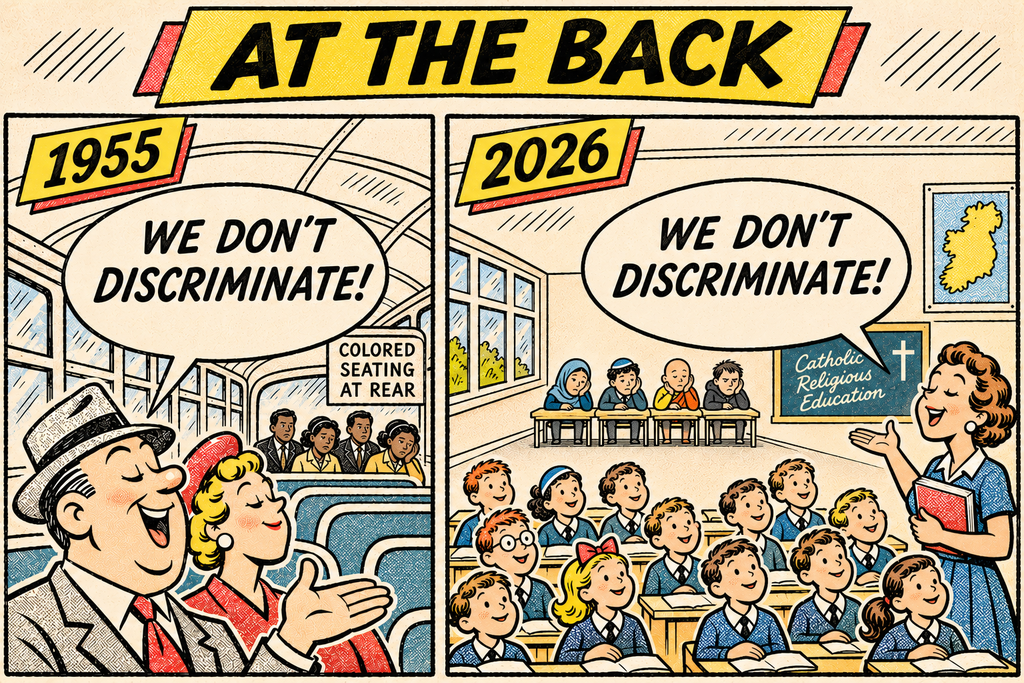
In 1950s America, many defenders of racial segregation insisted they were not discriminating against Black people. They argued that keeping Black and white people separate was perfectly acceptable, provided everyone was treated equally.
In fact, the words “Segregation is not discrimination” were used in the US Senate in 1946 and repeated in Congress in 1950.
This was the thinking behind separate but equal. Black people could use the same buses as white people, but were required to sit separately. Those defending the system could claim they believed in equality while supporting arrangements that denied it.
Fast forward to Ireland in 2026.
Most Irish primary schools are still under Catholic patronage. Children whose families are Muslim, Jewish, Buddhist, atheist or otherwise non-Catholic have a legal right not to participate in religious instruction.
But what happens when the rest of the class is learning Catholic prayers, preparing for the sacraments or receiving religious instruction?
In some schools, children who opt out remain in the classroom, sometimes sitting at the back or doing separate work while their classmates participate. Research and parents’ experiences have documented these arrangements.
Schools can genuinely believe they are welcoming and inclusive while continuing practices that leave some children feeling different or excluded.
In 1950s America, segregation was defended as perfectly reasonable. Today, we recognise it as discrimination.
Yet in Irish primary schools, children can still find themselves separated from classmates because of their religious beliefs or lack of belief. And just as in 1950s America, those responsible may genuinely believe they are treating everyone fairly.
Different decade. Different reason. Same principle: separating people because of who they are is discrimination.
Perhaps the most disturbing question is not why this happens, but why we find it so difficult to recognise.